
Have you ever wondered how much disasters really cost the global economy? The answer is more than US$2.3 trillion annually.
Supply chain disruptions, cascading economic impacts, and ecosystem losses all contribute to this staggering figure. This growing financial impact is changing how businesses think about risk and resilience.
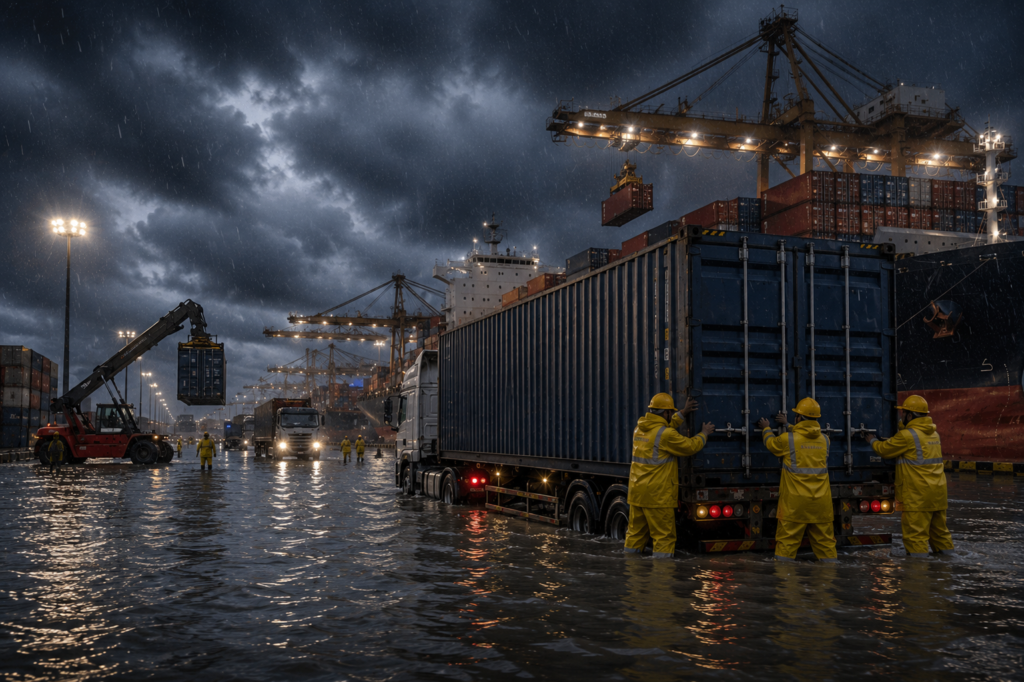
What happens when one flooded highway delays hundreds of export shipments from reaching a seaport? The disruption quickly spreads across the entire supply chain, affecting manufacturers, exporters, freight forwarders, and customers alike. What begins as a local incident can rapidly become a global business challenge.
That is why supply chain resilience is no longer just a logistics concern. It has become a strategic business priority. Companies are investing in preparedness, stronger logistics networks, and smarter risk management to keep goods moving during disruptions.
The recently signed UK–Bangladesh Disaster Management MoU reflects this growing focus on resilience. While the agreement strengthens cooperation in disaster management, it also offers valuable lessons for businesses that depend on reliable logistics and uninterrupted trade.
Understanding the UK–Bangladesh Disaster Management MoU
The UK–Bangladesh Disaster Management MoU establishes a framework for cooperation in disaster risk management, emergency preparedness, early warning systems, and technical knowledge sharing. It also creates a mechanism for potential UK support during disasters, helping Bangladesh strengthen its disaster resilience.
At first glance, the agreement appears to focus only on disaster management. However, its implications extend far beyond emergency response.
Businesses depend on roads, ports, airports, warehouses, customs facilities, and communication networks to keep goods moving. When disasters affect these systems, supply chains slow down, operational costs increase, and trade becomes more difficult.
By strengthening disaster preparedness and encouraging collaboration, the MoU contributes to a more reliable environment for international trade. It also reminds businesses that resilience is built through cooperation between governments, industries, and logistics partners.
How Natural Disasters Disrupt Supply Chains
Natural disasters rarely affect only one part of a supply chain. Instead, they create a chain reaction across transportation, manufacturing, warehousing, and distribution.
A flooded highway can stop trucks from reaching a port. Delayed vessels may miss sailing schedules. Damaged roads can interrupt inland transportation, while power failures may slow warehouse operations and customs clearance. What begins as a local weather event can quickly become an international supply chain disruption.
Bangladesh has experienced many of these challenges during severe monsoon seasons. During the heavy rainfall in Chattogram in July 2026, flooded access roads, slower cargo handling, and traffic congestion around the port demonstrated how quickly extreme weather can affect logistics operations.
Although port activities continued, the situation highlighted the importance of preparation, coordination, and operational flexibility. Even a short disruption can increase freight costs, delay deliveries, and affect customer satisfaction.
These challenges highlight the growing importance of disaster logistics. It focuses on the planning and coordination required to keep goods moving before, during, and after emergencies.
From rerouting shipments to coordinating with ports and customs authorities, effective disaster logistics helps businesses maintain continuity when normal operations are disrupted.
Why Supply Chain Resilience Matters More Than Ever
For many years, businesses focused primarily on making supply chains faster and more cost-efficient. Today, resilience has become equally important.
Supply chain resilience is the ability to prepare for disruptions, adapt quickly, and recover while keeping operations running. Instead of reacting after problems occur, resilient businesses identify risks early and develop practical contingency plans.
This may include creating alternative transportation routes, improving shipment visibility, diversifying suppliers, strengthening communication, and preparing emergency response procedures.
Businesses that invest in resilience often recover faster, reduce financial losses, and continue serving customers during periods of uncertainty. In today’s global economy, supply chain resilience is no longer a competitive advantage. It has become an essential part of long-term business success.
The Critical Role of Disaster Logistics
When disasters occur, businesses do not simply need transportation. They need a logistics partner capable of making rapid decisions while keeping cargo moving under changing conditions.
Unlike routine freight operations, disaster logistics requires flexible planning, close coordination, and fast execution. Logistics teams may need to reroute shipments, arrange multimodal transportation, secure temporary warehousing, coordinate with carriers and port authorities, or adjust delivery schedules within hours.
Fast and well-coordinated logistics reduce operational downtime, protect customer commitments, and support business continuity. Effective disaster logistics is not only about responding to emergencies. It is also about preparing for them before they happen.
How Logistics Partners Strengthen Business Continuity
Reliable logistics partners do much more than transport cargo. They help businesses maintain business continuity when unexpected disruptions occur by providing expertise, visibility, and operational flexibility.
Their support may include:
- Alternative transportation planning to avoid disrupted routes and minimize delays
- Coordinated air, ocean, and inland freight for uninterrupted cargo movement
- Efficient customs documentation and clearance to reduce border delays
- Flexible warehousing solutions for temporary storage and inventory management
- Real-time shipment visibility to improve planning and decision-making
- Rapid response to changing logistics conditions through proactive communication and operational adjustments
These capabilities strengthen supply chain resilience and help businesses minimize delays while protecting customer commitments. During uncertain times, having the right logistics partner can make the difference between a temporary challenge and a major operational disruption.
Key Lessons for Businesses
The UK–Bangladesh Disaster Management MoU offers valuable lessons for businesses involved in international trade.
The first lesson is that preparedness should begin long before an emergency occurs. Waiting until a crisis develops often leads to slower decisions, higher costs, and greater operational risks.
The second lesson is that resilience depends on collaboration. Governments, manufacturers, logistics providers, port authorities, transportation companies, and customs authorities all play essential roles in keeping supply chains moving.
The third lesson is that disaster risk management should become part of everyday business planning. Regular risk assessments, contingency planning, and continuous improvement help organizations prepare for future disruptions with greater confidence.
Ultimately, businesses that invest in supply chain resilience today will be better prepared to respond to tomorrow’s challenges.
FML’s Perspective
At Freight Management Limited (FML), we believe resilient supply chains are built long before disruptions occur.
Every shipment requires careful planning, strong coordination, and the ability to adapt when conditions change. Whether managing international freight forwarding, customs clearance, inland transportation, warehousing, or multimodal logistics, our goal is to help customers move cargo safely, efficiently, and reliably.
As global trade becomes more complex and climate-related risks continue to grow, businesses need logistics partners who combine local expertise with global connectivity.
Conclusion
Disruptions are inevitable. How businesses prepare for them determines their resilience.
The UK–Bangladesh Disaster Management MoU highlights the growing importance of preparedness, collaboration, and long-term planning in today’s interconnected world.
While businesses cannot prevent natural disasters, they can reduce their impact by strengthening logistics strategies, improving coordination, and investing in supply chain resilience.
Resilience is not built during a crisis. It is built through the decisions businesses make long before disruptions occur. Investing in preparedness today helps protect operations, strengthen customer confidence, and keep supply chains moving when they are needed most.
At Freight Management Limited (FML), we remain committed to helping businesses build resilient supply chains through reliable logistics solutions, local expertise, and global connectivity. Because in an unpredictable world, resilience is no longer optional, it is essential.