
A small temperature deviation can put an entire pharmaceutical shipment at risk.
Pharmaceutical products need more than ordinary transportation. Many medicines and healthcare products must stay within specific conditions throughout their journey. Otherwise, their quality and integrity may be affected.
This makes pharmaceutical logistics a careful and highly coordinated process. Planning, handling, timing, and temperature control must work together at every stage.
For temperature-sensitive cargo, even a small disruption can create a bigger problem. A loading delay, handling issue, or change in required conditions may put valuable products at risk.
Therefore, a reliable cold chain is essential for moving pharmaceutical cargo safely and efficiently.
Why Cold Chain Logistics Matters for Pharmaceuticals
Pharmaceutical cargo can be highly sensitive to changes in temperature. Depending on the product, the right conditions must be maintained throughout transportation to help protect its quality and integrity.
This is where cold chain logistics plays a critical role.
A cold chain keeps temperature-sensitive products within the required conditions during storage, handling, and transportation. However, maintaining that chain takes more than temperature control alone.
Each stage is connected. A delay during loading can affect transportation. Poor coordination can slow the shipment. Moreover, improper handling may expose sensitive cargo to unnecessary risk.
Effective cold chain management therefore requires careful planning, suitable equipment, timely coordination, and clear communication.
For pharmaceutical manufacturers and exporters, a well-managed cold chain can support more reliable pharmaceutical transportation and help keep shipments moving as planned.
How FML Handles Temperature-Sensitive Pharmaceutical Cargo
Every temperature-sensitive shipment starts with understanding its requirements.
At Freight Management Limited (FML), we plan our pharmaceutical logistics around the needs of the cargo. This includes arranging suitable transportation equipment and coordinating cargo handling, loading, and movement.
For pharmaceutical exports that require controlled conditions, reefer containers can be an important part of the process.
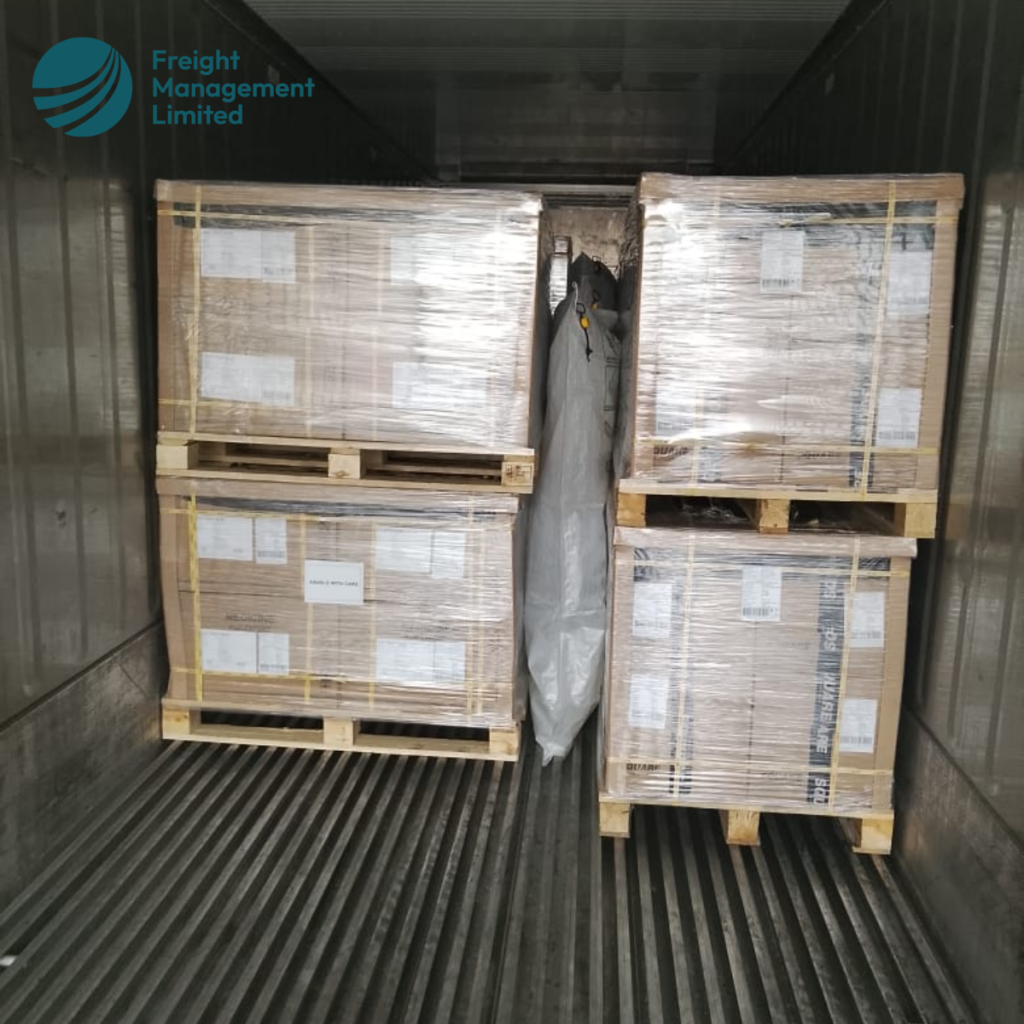
Temperature-sensitive pharmaceutical cargo being handled as part of FML’s reefer logistics operation.
These are not stock images. They show an actual pharmaceutical logistics operation handled by FML.
During loading, timing and coordination matter. The cargo, container, loading process, and transportation schedule need to stay aligned. Otherwise, unnecessary delays can affect the smooth movement of the shipment.
This is what temperature controlled logistics looks like in practice. Every step is planned around the requirements of the cargo rather than treating it like a standard shipment.
FML’s Approach to Pharmaceutical Logistics
From our experience, we believe reliable pharmaceutical logistics starts with understanding the cargo.
Temperature-sensitive shipments require careful planning and coordination. Therefore, we approach each movement according to its specific logistics requirements.
Our experience with temperature-controlled pharmaceutical exports gives us practical insight into this specialized area. From shipment planning and reefer container coordination to cargo handling and international transportation, each stage requires attention.
The real operational images featured in this article show that process in action. They reflect the planning and coordination behind moving temperature-sensitive pharmaceutical cargo.
Moreover, as pharmaceutical manufacturers and exporters reach more international markets, dependable pharma logistics will likely become even more important. Strong logistics can help connect products with global markets while supporting a reliable pharma supply chain.
Planning a temperature-sensitive pharmaceutical shipment? Contact FML to discuss your logistics requirements.