
New Mooring Container Terminal: What Modernization Could Mean for Bangladesh's Trade
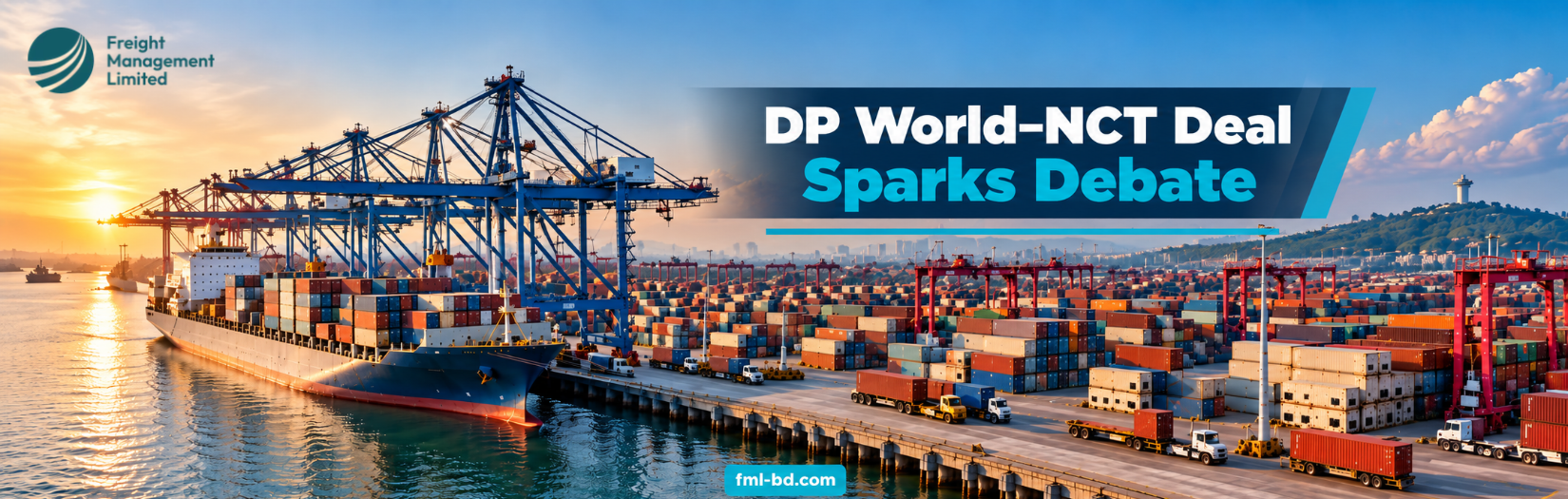
Can a controversial port agreement become a turning point for Bangladesh's international trade?
The recent 15-year agreement between DP World and the Chattogram Port Authority for the New Mooring Container Terminal (NCT) has sparked debate.
While some see an opportunity for modernization and improved efficiency, others question its long-term implications for port management and national interests.
Amid these contrasting views, one issue deserves attention: Bangladesh's importers and exporters need efficient & reliable port operations. Delays in cargo handling can disrupt production schedules, shipment commitments, and buyer confidence, particularly in the time-sensitive RMG sector.
Despite the debate, the agreement offers potential for operational improvements. If implemented effectively, NCT modernization could support smoother cargo movement, more predictable shipments, and a stronger logistics network for Bangladesh's global trade.
A New Chapter for Chattogram Port
On October 8, 2026, the Chattogram Port Authority (CPA) signed a 15-year concession agreement with Dubai-based DP World. Under the agreement, DP World will operate and maintain the New Mooring Container Terminal and its Overflow Container Yard.
Under the public-private partnership, CPA will retain ownership of the terminal, while DP World will take responsibility for its operations and maintenance.
The agreement aims to improve terminal performance through infrastructure upgrades, modern technology, and international operational expertise.
For Bangladesh, the significance extends beyond the agreement itself. It presents an opportunity to improve how cargo moves through one of the country's most important trade gateways.
How Could NCT Modernization Improve Port Efficiency?
A container terminal connects maritime transport with the wider supply chain. Its performance influences how efficiently containers move between vessels, storage yards, and inland transport.
At NCT, the modernization plans include equipment upgrades, digital solutions, and improvements in berth planning, yard management, and maintenance.
These changes could help operators manage daily work and make better use of staff and equipment.
For example, better berth planning could support smoother vessel handling. Improved yard management could also reduce unnecessary container movements and make cargo handling more organized.
However, these benefits will depend on how successfully the planned improvements are implemented.
How Could This Help Importers and Exporters?
For importers, delays in receiving essential materials can disrupt production schedules. For exporters, unexpected cargo movement delays can affect shipping commitments.
Both depend on predictable logistics operations.
If terminal efficiency improves, businesses may gain better control over shipment planning and cargo coordination. More consistent container handling could also help freight forwarders arrange onward transportation and manage delivery schedules.
Still, efficient terminal operations alone cannot guarantee faster shipments. Customs procedures, documentation, inland transport, and shipping schedules also influence cargo movement.
This makes coordination across the entire supply chain just as important as improvements inside the port.
Why Port Efficiency Matters for Bangladesh's RMG Sector
Bangladesh's ready-made garments industry operates within demanding international supply chains. Manufacturers must coordinate raw material imports, production schedules, and finished-goods exports while meeting buyers' delivery expectations.
A delay at any stage can create pressure on the next.
For example, late arrival of imported fabrics may affect production timelines. Similarly, delays in moving export containers can reduce the time available to meet scheduled vessel departures.
Better terminal operations could support more reliable cargo movement and help businesses plan shipments with greater confidence.
For RMG exporters, such improvements would be particularly valuable because delivery reliability plays an important role in maintaining long-term relationships with international buyers.
Modernization Brings Opportunities, but Challenges Remain
The NCT agreement represents a significant development, but its success will depend on effective implementation.
Infrastructure upgrades, new technology, workforce readiness, and coordination among stakeholders will all influence operational performance.
The agreement has also faced opposition from political and labour groups, raising questions about the management transition and its wider implications.
These concerns highlight the importance of transparent implementation and operational continuity.
For businesses using Chattogram Port, the key consideration is not simply who operates the terminal. What matters is whether these changes improve cargo handling, make services more reliable, and help goods move more smoothly.
Why Freight Forwarding Remains Essential
As port operations evolve, effective freight forwarding will remain central to international cargo movement.
A modern terminal may improve container handling, but businesses still need accurate documentation, timely shipment updates, reliable transport coordination, and proactive planning.
Freight forwarders connect these activities across different stages of the supply chain. They help importers and exporters manage shipping requirements, coordinate cargo movements, and respond when operational conditions change.
For logistics companies such as Freight Management Ltd. (FML), understanding developments in Bangladesh port logistics is essential to supporting informed shipment planning and dependable cargo coordination.
Looking Ahead: A More Connected Trade Future
The modernization of the New Mooring Container Terminal could mark an important step toward a more efficient logistics environment in Bangladesh.
Its long-term value will depend on whether planned improvements translate into better operational performance and more predictable cargo movement.
For importers, exporters, and RMG businesses, the opportunity is clear: a more efficient port system could support stronger supply chains and greater competitiveness in international markets.
Because global trade does not depend on how quickly cargo reaches a port alone. It depends on how reliably the entire supply chain keeps moving.